

What happens inside a home after a roof begins to leak?
A leaking roof can affect far more than shingles and attic insulation. Water may travel along rafters, decking, wall cavities, and ceiling materials before becoming visible indoors. By the time a stain appears, moisture may already have affected several parts of the structure.
For households in Victor, NY, roof leaks can be especially disruptive because seasonal rain, snow, ice, wind, and repeated freeze-thaw cycles place changing demands on roofing materials. A small opening may allow water to enter during one storm, then expand or worsen as temperatures shift.
The visible drip is often only the most obvious symptom. The more significant damage may be hidden above the ceiling or behind finished walls.
How can a roof leak weaken roof decking and framing?
Roof decking is the sheet material attached over the roof rafters or trusses. It supports the roofing layers and helps distribute weight across the structure. When decking stays wet, it can swell, soften, delaminate, or begin to decay.
Continued moisture can also affect:
- Rafters and roof trusses
- Ridge boards and roof sheathing
- Fasteners and metal connectors
- Attic platforms and storage areas
- Framing around chimneys, vents, and skylights
Wood does not need to be visibly soaked every day to develop problems. Repeated wetting and drying can gradually reduce its strength. A weakened section may sag, flex, or lose its ability to hold roofing materials securely.
In severe cases, water-damaged decking may make portions of the roof less stable. This is more concerning when the roof is carrying snow or when a person walks on it during maintenance.
Can a roof leak cause ceiling or wall damage?
Yes. Water entering through the roof can move horizontally before it reaches the interior surface. Insulation, framing, electrical openings, and uneven ceiling materials can redirect the flow.
Common interior signs include:
- Brown or yellow ceiling stains
- Bubbling paint or peeling drywall
- Soft spots near ceiling fixtures
- Damp or discolored insulation
- Cracked plaster
- Musty odors
- Staining high on an exterior wall
A ceiling stain may remain after the surface dries, but that does not prove the problem has stopped. Water can enter only during certain wind directions or heavy precipitation. It may also appear in a different room from the original entry point.
Walls can be affected when moisture travels down rafters or enters around roof-to-wall intersections. Over time, damp wall framing may swell, decay, or lose its ability to support attached finishes.
Why is attic moisture a structural concern?
The attic is often the first part of a home affected by a roof leak, and damage there can remain unnoticed. Insulation may hide wet decking, while limited attic access makes routine inspection difficult.
Persistent moisture in an attic can lead to:
- Rot in roof sheathing and framing
- Corrosion of nails, straps, and other metal components
- Compressed or ineffective insulation
- Damp areas around vents and penetrations
- Mold growth on suitable surfaces
- Condensation that worsens during cold weather
Not every attic moisture problem comes from a roof opening. Poor ventilation, air leakage from the living space, and bathroom exhaust directed into the attic can also contribute. Distinguishing between roof leaks and condensation matters because the repairs are different.
A useful clue is timing. Water that appears after rain or melting snow may point toward an exterior leak. Frost or moisture that develops during cold weather without precipitation may indicate a ventilation or air-sealing issue.
Can a roof leak affect electrical systems?
Water and electrical wiring create a serious safety concern. A leak near ceiling fixtures, attic wiring, junction boxes, outlets, or electrical equipment can increase the risk of short circuits, damaged components, or fire.
Warning signs may include:
- Flickering lights after precipitation
- A tripped breaker
- Buzzing or crackling near a fixture
- Discoloration around an electrical box
- A burning smell
- Water near outlets or switches
Avoid touching wet electrical components or standing beneath a leaking fixture. If water is actively entering near electrical equipment, occupants should move away from the area and use the home’s electrical shutoff only if doing so is safe and dry. Electrical hazards may require prompt evaluation by a qualified electrician.
How can a small roof leak become a larger structural problem?
A small leak can become more damaging when it remains unresolved through multiple storms or seasons. Moisture may gradually travel into materials that were initially dry, while repeated expansion and contraction opens gaps around fasteners, flashing, and roof penetrations.
A leak may worsen because of:
- Damaged or missing shingles
- Failed flashing around roof openings
- Clogged or poorly draining roof valleys
- Ice dams during freezing weather
- Wind-lifted roofing materials
- Cracked sealants
- Aging roof decking
- Improperly directed drainage
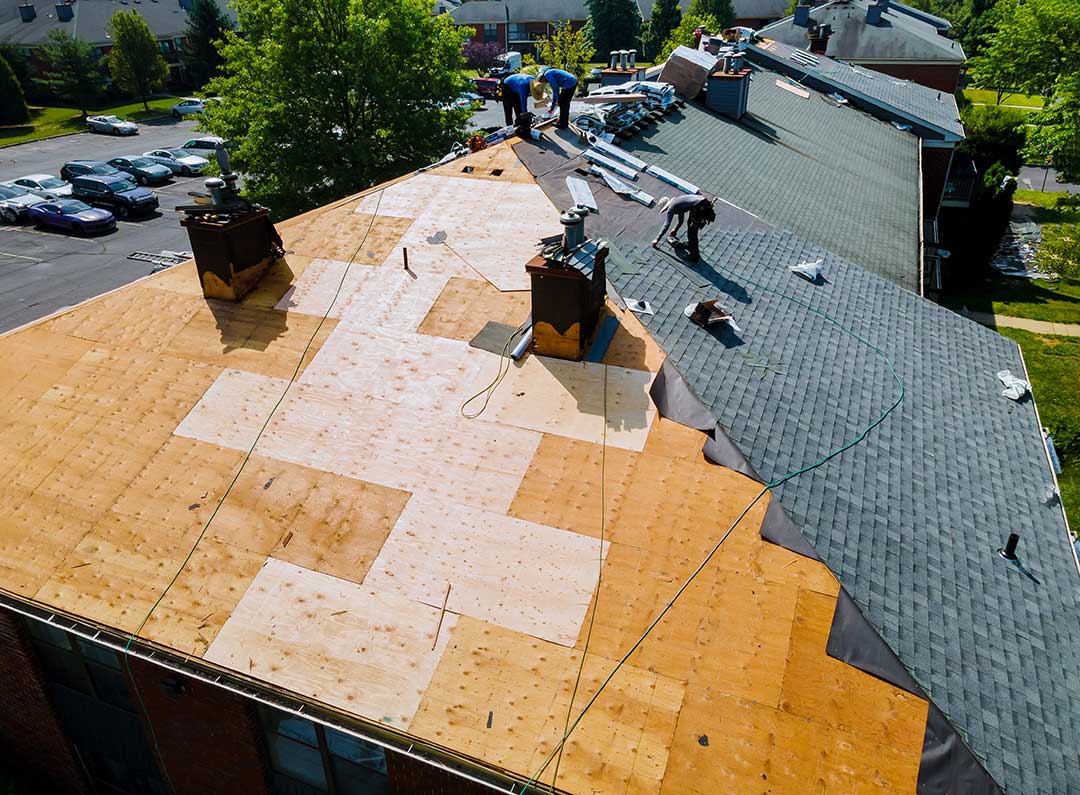
Water damage often progresses slowly. The roof may not collapse suddenly, but its components can lose strength over time. The risk increases when a home has already experienced previous leaks, unvented renovations, or long-term moisture exposure.
What should residents look for after a major storm?
A ground-level inspection can identify warning signs without requiring anyone to climb onto the roof. After heavy rain, high winds, or snow and ice, check visible areas from the ground and inspect accessible interior spaces.
Look for:
- Shingles or roofing fragments on the ground
- New ceiling stains
- Sagging gutters or roof edges
- Water in the attic
- Damp insulation
- Exposed underlayment or decking
- Debris collecting in valleys or drainage paths
- Ice buildup along roof edges
- Drips around attic penetrations
Do not walk on a roof that is wet, icy, visibly sagging, or damaged. Snow-covered roofs can hide weak areas, and ice may make footing unpredictable. A roof with signs of structural movement should be treated as a safety hazard rather than a routine maintenance task.
Does a roof leak always mean the whole roof needs replacement?
No. The appropriate response depends on the source, duration, location, and extent of the damage. A localized problem involving flashing, a single roofing section, or a roof penetration may not affect the entire roof system.
However, a limited exterior repair may not be enough if water has already damaged:
- Roof decking
- Structural framing
- Insulation
- Interior ceilings or walls
- Electrical components
- Ventilation pathways
The key question is not only where water entered, but also how far it traveled and how long materials remained damp. Drying and documenting affected areas can help determine whether damage is cosmetic, material-related, or structural.
When does a leak require immediate attention?
Prompt action is warranted when the ceiling is sagging, water is actively flowing, electrical components are involved, or structural wood appears soft or distorted. These conditions can worsen quickly and may create risks for occupants.
Even without an emergency, a recurring stain, musty odor, damp attic, or unexplained interior moisture should not be ignored. Roof leaks are easier to address before they affect framing, insulation, walls, and electrical systems.
For homes in the area, seasonal inspections are particularly useful before periods of heavy rain, winter precipitation, and rapid temperature changes. Keeping roof drainage paths clear and checking accessible attic spaces can reveal problems before they spread into the living areas.
