
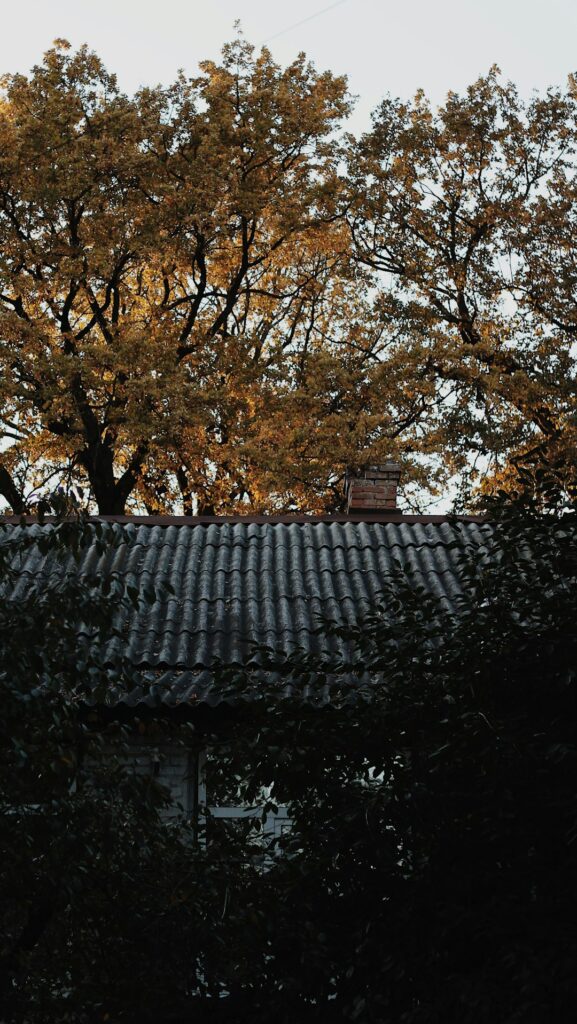
Shade trees can help protect a roof from intense summer sunlight, but they can also create conditions that shorten roof life if branches, leaves, and moisture are not managed. The effect depends less on the presence of trees alone than on their distance from the roof, canopy density, species, and maintenance.
Do shade trees help a roof last longer?
Yes, shade can reduce some forms of weathering. Tree canopy blocks direct sunlight, which lowers roof-surface temperatures during hot, sunny weather. That can reduce repeated expansion and contraction in roofing materials, particularly on dark asphalt shingles and exposed flashing.
Shade may also help moderate indoor heat gain during summer. However, these benefits do not cancel out the risks associated with overhanging branches or poor air circulation.
A tree positioned near—but not directly over—a roof may provide useful afternoon shade while allowing the roof to dry and remain accessible for inspection. A dense canopy that rests on the roof is a different situation.
How do trees damage roofing materials?
The most obvious risk is physical contact. Branches that rub against shingles can wear away the protective surface, loosen tabs, and expose the underlying mat. Even small twigs can act like sandpaper when moved repeatedly by wind.
Larger branches create additional hazards:
- Falling limbs can crack or puncture shingles.
- Heavy branches can damage gutters, vents, skylights, or chimney flashing.
- Tree movement can pull against nearby utility lines or structures.
- Weak or dead limbs may fail during wind, ice, or wet snow.
In Victor, winter conditions can make these concerns more significant. Snow accumulation, freezing rain, and strong gusts can add weight to branches that appear stable during summer. Trees that are healthy in warm weather may still have deadwood or weak branch unions that become hazardous in winter.
Why do leaves and needles matter?
Leaves, needles, seed pods, and small twigs can collect in roof valleys, behind chimneys, and along flashing. These areas are designed to move water away from the roof, so organic debris can obstruct drainage.
When debris stays wet, it can keep roofing materials damp for longer periods. Repeated dampness may encourage moss or algae growth, especially on shaded roof slopes with limited sunlight and airflow. Moss can lift or separate shingle edges as it grows beneath them. Algae is usually more of a discoloration concern, but it can signal a roof surface that remains damp.
Debris can also wash into gutters and downspouts. Blocked drainage may cause water to overflow against fascia boards, siding, windows, or foundation areas. During freeze-thaw weather, wet debris and trapped water may freeze, expand, and worsen small defects.
Does shade itself cause moss?
Shade does not automatically cause moss, but it can create a more favorable environment for moss when moisture is already present. Moss is more likely where several conditions occur together:
- Limited direct sunlight
- Poor roof ventilation or airflow
- Persistent leaf or needle coverage
- Damp, rough, or aging shingles
- Nearby branches that prevent the roof from drying
A roof on the north-facing side of a home may naturally dry more slowly than a sunny south-facing slope. A heavily wooded lot can increase that effect, particularly during spring and fall when moisture and organic debris are common.
Moss should not be scraped aggressively from shingles. Pulling or brushing it off forcefully can remove protective granules and damage the surface. The underlying cause—usually moisture, shade, or debris—also needs attention or the moss may return.
How far should tree branches be from a roof?
There is no single distance that works for every tree, roof design, or property. A practical goal is to keep branches from touching the roof and to leave enough clearance for wind movement, seasonal growth, and safe inspection.
Branches that currently sit several feet away may reach the roof as they grow. Mature canopy size matters more than the tree’s height at planting. Fast-growing trees require more frequent observation because the clearance can disappear within a few seasons.
Clearance should also be considered around:
- Chimneys and plumbing vents
- Skylights and roof windows
- Gutters and downspouts
- Roof valleys
- Dormers and low-slope sections
- Areas where snow slides from the roof

The trunk and major limbs should be evaluated separately from small branch tips. A tree can be well away from the roof while still having a large limb positioned over it.
Can pruning improve roof longevity?
Appropriate pruning can reduce rubbing, debris accumulation, and the chance of branch impact. It may also improve airflow and allow shaded roof areas to dry more quickly.
Pruning should preserve the tree’s natural structure rather than removing large portions of the canopy at once. Excessive cutting can stress a tree, stimulate weak regrowth, or create larger wounds. Cutting practices also vary by species, age, condition, and proximity to structures.
Branches near electrical lines, large limbs over a roof, and visibly unstable trees present genuine safety concerns. Those situations require specialized equipment and judgment because a falling limb can injure people or damage the home.
What roof maintenance is most useful under trees?
Homes with substantial tree cover benefit from more frequent visual checks, especially after storms and during autumn leaf drop. The inspection does not always require walking on the roof. From the ground or a safe upper-level view, look for:
- Shingles that are missing, lifted, cracked, or unusually dark
- Branches or twigs resting on the roof
- Heavy leaf buildup in valleys
- Sagging or overflowing gutters
- Moss concentrated on shaded slopes
- Damaged flashing around chimneys, vents, or skylights
- Granules collecting heavily near downspouts
Gutters and downspouts may need attention more often in wooded areas than in open yards. Clearing them before winter is particularly useful because blocked drainage combined with freezing weather can create avoidable stress.
After a major storm, check for broken limbs, new roof debris, exposed underlayment, or visible openings. Small damage can become more serious when followed by rain, snow, and repeated temperature changes.
Do shade trees affect different roofing materials differently?
They can. Asphalt shingles are vulnerable to surface wear from rubbing branches and may develop moss in damp shade. Wood roofing materials can retain moisture and may be more sensitive to prolonged dampness, decay, and organic buildup.
Metal roofing generally resists moss and organic deterioration better, but branches can scratch coatings or dent panels. Membrane and low-slope roofing systems can also be affected by punctures, blocked drains, and standing water caused by debris.
The roof’s age matters as well. A newer roof may tolerate occasional debris better than an older roof whose sealants, flashing, and shingle surfaces have already weathered. Shade can slow heat exposure, but it cannot restore materials that are already brittle or damaged.
What is the best balance between trees and roof protection?
The most roof-friendly arrangement usually combines filtered shade with open air movement, no branch contact, and reliable drainage. Trees do not need to be removed simply because they are near a home. The key questions are whether the canopy touches the roof, whether debris remains wet, whether branches threaten the structure, and whether the roof can be inspected and maintained safely.
For households in Victor, seasonal observation is especially useful. Check clearance during summer growth, inspect debris after autumn leaf fall, and reassess branch weight before periods of snow, ice, or strong wind. That routine helps preserve both the benefits of shade and the roof’s ability to shed water and withstand changing weather.
